Please Stop Putting Us in the 'Global' Box
A programmer once showed me the drop-down menu on their booking spreadsheet. Fifteen options. Alongside 'indie', 'electronic' and 'hip-hop' sat a single catch-all that had absorbed, by their own estimate, about forty per cent of the applications they received from artists born outside the UK. It said 'world'.
That menu is not a neutral filing system. It is a set of instructions about where an artist belongs, what time they play, which stage they get and what the audience expects to hear when they arrive. And for a young international artist trying to build something in the UK, those three or four words can be the most consequential part of the entire booking process.
The label is doing more work than you think
Nobody sets out to ghettoise a nineteen-year-old from Bogotá or Busan. But 'global' as a category carries a specific set of assumptions: that the artist represents a place rather than a practice; that the music is rooted in tradition rather than made in a bedroom with a cracked copy of Ableton; that the set is a form of cultural display rather than a live show you would choose on a Friday night.
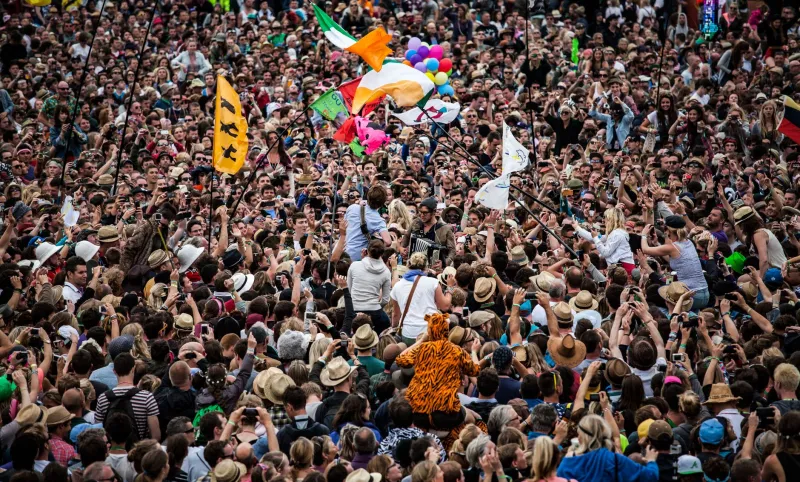
Those assumptions then shape everything downstream. The 'global' artist plays the Sunday afternoon slot on the second stage, in front of a crowd eating lunch and half-listening. They are introduced with a reference to their country of origin before their name. They are photographed in a way that emphasises costume. They are reviewed with the word 'infectious', which is what UK critics write when they cannot describe rhythm without becoming anthropologists.
Meanwhile the artist next to them on the bill — same age, same influences, born in Croydon — gets a headline, a photo in the dark and a review about songwriting.
It is not only a festival problem
Radio does a version of this. Streaming platforms do a bigger version of it: 'world' still functions as a shelf, and shelves are where things go to be ignored by people who were never sent down that aisle. Award categories do it. Even funding applications do it, because the forms were designed when there were four kinds of music and everyone in the room was from the same three cities.
The result is a quiet sorting mechanism. An artist who writes alt-pop with Yoruba cadence gets filed under 'world' and pitched to a world music audience, which is not their audience at all — it is a different, older, more cautious audience that may love them, but will never be the crowd at their own headline show.
The 2pm problem
Here is the practical cost, and it is not abstract.
An early-afternoon slot means a thinner crowd, a shorter changeover, less press attention and a lower fee. It also means the artist is less likely to be seen by the bookers who matter for the next step up. Slot placement compounds: play the 2pm slot twice and you are a 2pm artist.
One emerging practitioner I spoke to, an MC based in Leeds whose family is from Accra, put it neatly: 'I have played six UK festivals. Five of them put me on before 3pm and four of them described me as African in the first sentence of the blurb. My actual music is drill-adjacent rap about buses. I do not think anyone has ever written that down.'
What programmers say actually helps
The frustrating part is that most of the bookers I have asked are not defensive about this. They know the categories are blunt instruments. They are also working from forms, spreadsheets and a limited number of slots, and they default to whatever the paperwork gives them.
What they say moves an artist from the pile to the shortlist is almost never a genre. It is:
- A clean, specific description in the artist's own words. 'Tape loops, spoken word and Tamil percussion' tells a programmer three useful things. 'Fusion' tells them nothing.
- A two-minute live video that shows a room reacting. Not a music video. A room. Bookers book rooms.
- A named reference point that is honest. Saying you sit between Tirzah and Jockstrap is a different proposition than saying you are 'genre-defying' — and it lets a programmer imagine a stage and a time.
- Evidence of a UK audience already forming. Even small numbers help: a London headline show that sold out at 80 capacity, a support slot with a UK act, a community radio session that got shared around.
- Language that does not lead with geography. Not because where you are from does not matter — of course it does — but because it should not be the first thing a stranger is told about your sound.
Say the specific thing
So here is the ask, and it is addressed to artists as much as to programmers. Stop accepting the box. If the form gives you a drop-down, use the free-text field or the notes section to describe what you actually do in eight words. If a promoter introduces you as 'all the way from [country]', gently send them the sentence you would rather they used.
Specificity is not a rejection of your background. It is a refusal to let your background stand in for a whole artistic identity that you have spent years building. A Kashmiri-diaspora singer making shoegaze is not a compromise between two things. They are one thing, and the thing has a name.
And for the bookers: put the free-text field back on the form. Ask what the artist sounds like and what they want the audience to do. Then read it. You will find that the 'global' pile was never one pile — it was eight or nine scenes you had not been introduced to yet, and half of them are the reason people buy tickets.