Split the Fare, Double the Stage: A Practical UK Festival Pairing Plan

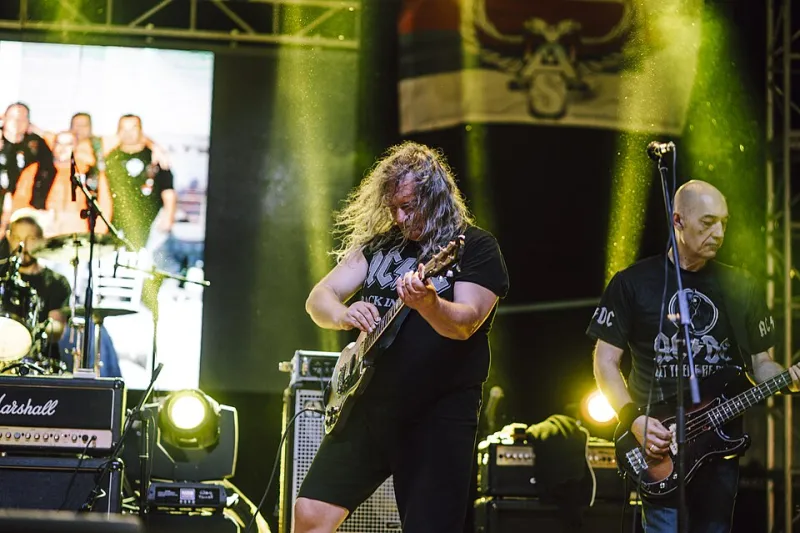
Photo: Frankie Fouganthin, CC BY-SA 3.0, via Wikimedia Commons
Two international acts from the same city do not need to become a package deal to make a UK festival trip add up. They just need to share the boring parts: the flight search, the hotel booking, the airport run and the conversation with the promoter. Done well, a paired trip can turn one low-fee slot into two sets, two audiences and a much smaller hole in each act's bank account.
Start with the maths, not the dream
Here is a sample split for two acts — six people in total — flying from Berlin to Manchester for a Friday night festival. These are illustrative figures, not quotes:
| Cost | Total | Per act |
|---|---|---|
| Return flights, six people, cabin bags only | £1,080 | £540 |
| Three twin rooms, two nights at £110 | £660 | £330 |
| Airport train and local transfers | £150 | £75 |
| Shared backline hire | £210 | £105 |
| Total fixed costs | £2,100 | £1,050 |
Now add fees. If the promoter pays £1,500 per act, each act clears £450 before merch, food and contingency. That is not a fortune. But if the same two acts pitch separate weekends and pay separate fixed costs, the maths gets worse before it gets better. Sharing the trip does not guarantee profit. It does make a modest booking survivable.
Keep variable costs separate. Each act pays its own visas, insurance, food and merch stock. Split only the fixed costs you both use. Put the agreement in writing, even if it is one page: who books the rooms, who pays the deposit, what happens if one act cancels, how the backline is shared and who keeps the merch money. Separate invoices are essential. A promoter should see two acts with two fees, not one discounted bundle.
Make it a partnership, not a bundle
The fastest way to lose a decent fee is to let a promoter think they are booking a two-for-one. Pitch the partnership as a travel arrangement, not a product. Say: 'We are two acts from the same scene travelling together to reduce costs. We are each independently booked and invoiced.' Then give the promoter two press kits, two sets of links and two technical specs.
Decide early who leads on communication. One named contact is easier for a promoter than a group email, but that person must copy the other act on every fee conversation. Agree a veto: neither act accepts a slot on behalf of the other. If the promoter only wants one of you, that is allowed. The partnership is a route to more gigs, not a trap.
Pitch it in one page
Promoters are busy. Your shared pitch should fit on one screen: who you are, where you are travelling from, the dates you can do, two live links, one shared travel plan and two separate fee expectations. Add a line about the double bill: 'We can offer two 30-minute sets with a 15-minute changeover, sharing backline and travel.' That is useful information. 'We come as a package' is not.
Offer the promoter a ready-made shape for the night. One act opens, one closes. The opener should be the act with clearer hooks and less reliance on the crowd knowing the songs. The closer can be stranger, louder or more visual. The point is contrast, not competition. If both sets are 30 minutes of the same tempo and the same between-song chat, the room will feel longer than it is.
Warm the room, then hand it over
The changeover is part of the show. Share a stage plot before you travel. Agree who uses which DI, which pedalboard stays on stage and where the drum rug goes. Rehearse the handover once, even if it is in a rehearsal room with a stopwatch. A messy 15-minute changeover kills the goodwill the first act has built.
The opening act's job is not to be the support. It is to make the room curious. Start with the song that has the clearest vocal, keep the chat short and leave the audience wanting the next thing. The closing act should acknowledge the handover — a namecheck costs nothing and makes the bill feel intentional. If the promoter sees two acts behaving like a bill rather than two separate ego trips, you are more likely to be asked back together.
Protect the friendship and the fee
Write down what happens if one act's flight is cancelled or one member gets ill. The other act should not be liable for the missing set. Keep separate bank accounts, separate receipts and separate merch floats. At the end of the trip, do a 20-minute debrief: what did the promoter actually pay for, what did the room respond to and what would you split differently next time?
A shared UK trip is not a shortcut to a career. It is a way to make one trip do more work. Two acts, one route, two sets and a clean invoice can be the difference between a festival that costs you money and a festival that earns you a return call.