A Translator, a Quiet Room, a Named Human: Inside the New Festival Rider
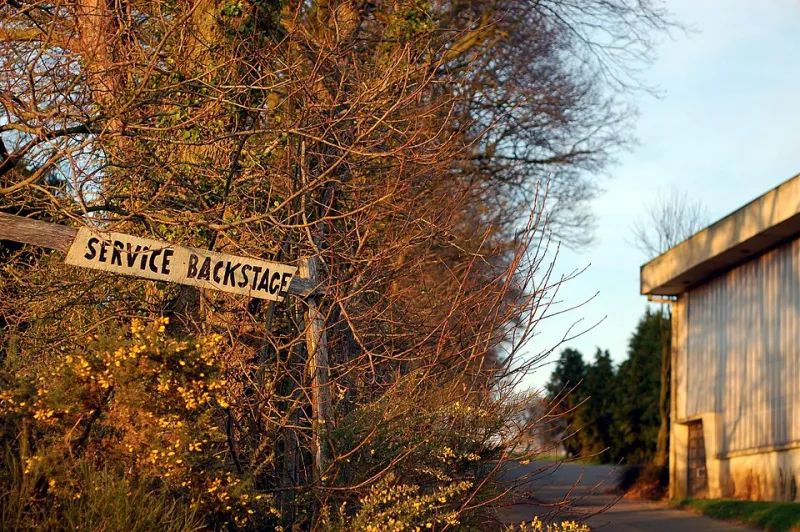
Photo: bjaglin from Lund, Sweden, CC BY 2.0, via Wikimedia Commons
The rider used to be a flex. A crate of something specific, a bowl of something ridiculous, a note about the towels. In 2026, the riders arriving at UK festivals are increasingly asking for something else entirely: an hour of quiet, a translator, a meal that won't put someone in hospital, and the name of a human being who will actually pick up the phone.
I've been reading a lot of advances this year — the paperwork that goes back and forth between artist and promoter before anyone loads in. The shift is unmistakable. The asks are smaller on paper and heavier in meaning. And they tell you more about who can afford to tour than any headline fee ever will.
The rider used to be a flex
There's a version of festival folklore where the rider is a punchline: the deli platter nobody eats, the specific brand of water, the demand that the dressing room be painted a certain shade. Some of that still exists, sure. But among the emerging international artists who make up the WEYA end of the bill — the ones flying in from Lagos, Seoul, São Paulo, Berlin — the rider has become a different document. It reads less like a wish list and more like a risk assessment.
That's not because these artists are less ambitious. It's because they're touring in a system that charges them more for the privilege. Visa fees, immigration health surcharge, equipment carnets, the cost of getting a cello or a modular synth through customs. By the time they reach a UK field, they've already spent a chunk of the fee before they've played a note. The rider is where they try to claw back some control.
What's actually being asked for
The requests I'm seeing are specific and unglamorous. A quiet hour before doors, not because the artist is precious but because they're neurodivergent and a noisy site is a sensory minefield. A translator for the soundcheck and the safety briefing, not just the press interview — because a misunderstood monitor mix is annoying, but a misunderstood evacuation procedure is dangerous. Allergen-safe food that's actually labelled, not a shrug and a plate of chips. And a named human on site: someone whose number is in the advance, who knows the artist's name, who can answer the question 'where do I leave my case?' without sending them to a generic inbox.
None of this is extravagant. Most of it costs almost nothing. A quiet room can be a signed-up Portakabin. A labelled meal is a conversation with the caterer. A named contact is a rota decision. But together, these asks describe a different kind of festival — one that assumes the artist is a person with needs, not a content unit with a rider.
Why small asks are big signals
Here's what the quiet rider reveals: the artists asking for these things are often the ones who have the least margin for error. A UK headline act can absorb a chaotic advance because they have a tour manager, a label, a publicist and a decade of institutional knowledge. An emerging international artist might be travelling with one collaborator and a borrowed guitar. If the quiet hour disappears, they don't just have a bad show — they have a meltdown, a missed flight, a health scare, a story they'll tell other artists back home.
So when a promoter sees a rider asking for a translator and a quiet space, they're not looking at a diva list. They're looking at a map of where the festival's infrastructure is thin. The artist is doing the promoter's risk assessment for them, for free.
Care isn't a premium tier
The obvious trap is to treat this as an upsell. Add a 'wellbeing package' to the artist offer, charge it back, make it a line item that only the acts with leverage can afford. That would be a mistake — and not just morally. It would also be bad producing. Care that's optional is care that disappears the moment budgets get tight, which is exactly when it's most needed.
The festivals getting this right in 2026 are building it into the baseline. They're putting a quiet-space question in the standard advance form. They're asking every artist, not just the headliners, whether they need a translator. They're briefing caterers on allergens before the first rider lands. They're naming a production assistant as the on-site contact for every act, not just the ones with a tour manager. The cost is mostly coordination, and coordination is labour — which means it needs to be budgeted, not volunteered by the most conscientious person on the team.
Who gets to be comfortable?
There's a harder question underneath all this. The quiet rider is a reminder that discomfort is not distributed evenly. UK artists playing UK festivals can go home to their own bed, their own kitchen, their own GP. International artists are often expected to be grateful for the opportunity, to absorb the chaos, to not make a fuss. The small asks are a way of saying: I'm not asking for luxury, I'm asking for the conditions to do the work.
Promoters who understand that will find that the quiet rider is actually a gift. It tells you what to fix. It tells you which artists are touring on a knife-edge. It tells you where your festival is still built for people who already know the ropes. And it gives you a chance to be the promoter that emerging artists tell their friends about.
A note for the advance email
If you're a promoter reading this, try adding three lines to your standard advance. Do you need a quiet space? Do you need a translator or access support? Who is your named contact on site, and what's the best number for them? Then actually answer. It's not a premium add-on. It's the bare minimum of a festival that works.
If you're an artist reading this, keep asking. The rider is not a demand for champagne. It's a description of the conditions you need to be brilliant. Put it in writing, be specific, and don't apologise for it. The right promoter will read it as a plan, not a problem.